-
The call for applications is currently open only for residents of the rural areas of pre-selected raions in the following oblasts:
- Dnipropetrovska oblast: Synelnykivskyi, Nikopolskyi, Kryvorizhskyi raions;
- Kharkivska oblast: Kharkivskyi, Iziumskyi, Chuhuivskyi, Kupianskyi raions;
- Zaporizka oblast: Zaporizkyi raion.The current application phase opens on 12 November 2026 and lasts until 30 November 2026, with the possibility of extension to reach the target number of participants.
Target audience: Internally Displaced Persons (IDPs) or locals with low income affected by the military conflict in Ukraine who possess at least one of the following supporting documents:
- IDP certificate (displaced for more than 6 months);
- Medical certificate confirming injury or psychological trauma resulting from military hostilities (signed and stamped by a physician);
- Official confirmation of the loss of a household member due to military hostilities;
- War-related disability certificate;
- Act on damaged or destroyed property;
- Confirmation of residence in a settlement included in the "List of territories where hostilities are (were) conducted" (as of the date of application review).
Applicants must also meet at least one of the following vulnerability criteria:
- Households with 3 or more children under 18 years of age;
- Households with pregnant women and children under 2 years of age;
- Single-headed households with children under 18 years of age;
- Households with members having special health needs (people with disabilities, chronic illnesses, or requiring expensive medical treatment and care);
- Elderly-headed households (60+), including single elderly individuals;
- Households where all adult members aged 18–49 are unemployed;
- Households that include war veterans who have completed military service;
- Young households (headed by parents/caregivers aged 24 and under inclusive);
- Households with at least one unemployed family member aged 50–59.
All vulnerabilities must be supported by official documentation.
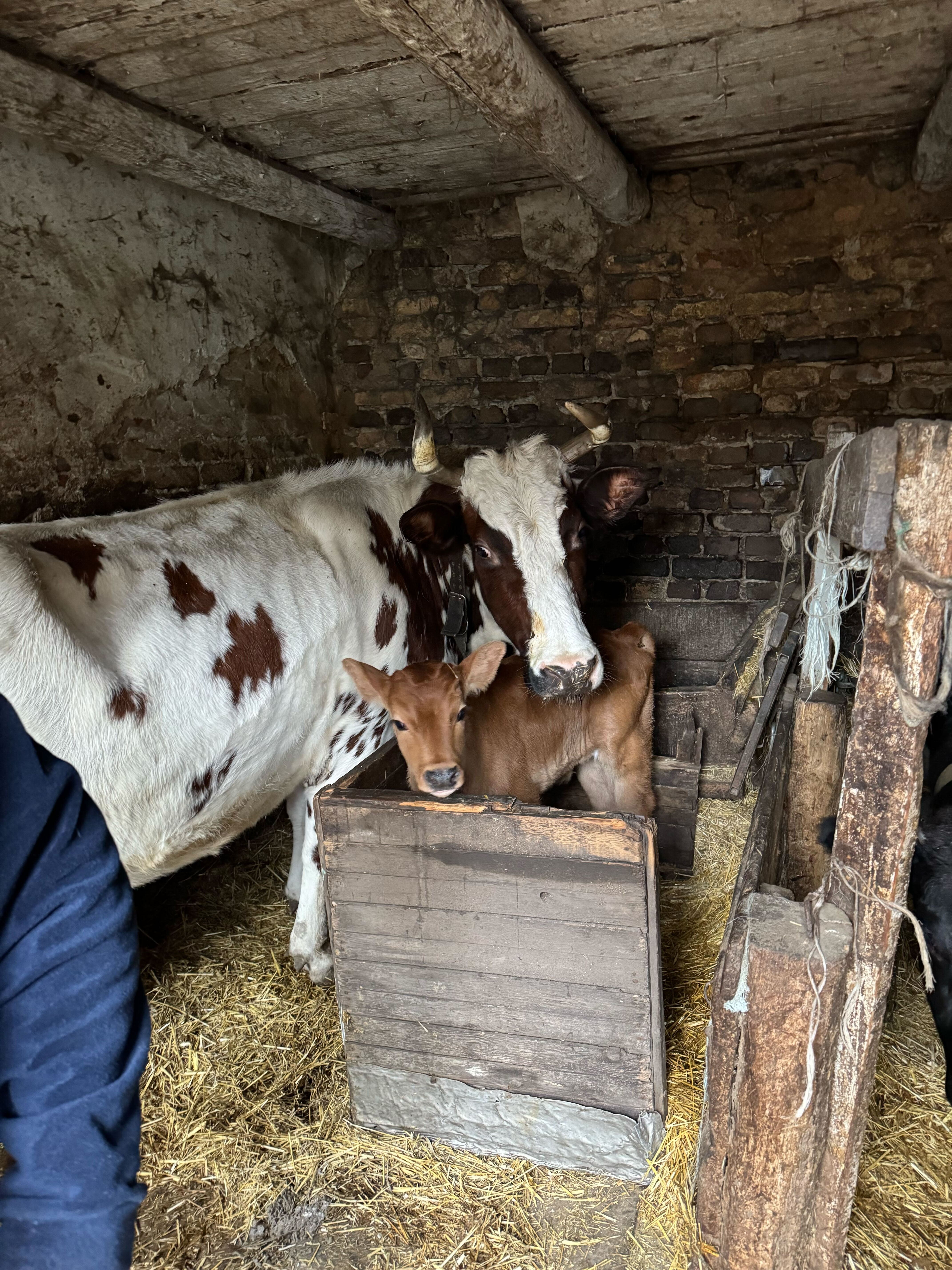
During the application review process, priority will be given to households living in rural areas that employ negative coping strategies to survive and depend on livestock production as the main source of food for their own consumption and self-sufficiency.
What types of activities are supported under this programme?
1) For single needs: the assistance amount is fixed for the categories listed below. Please consider the assistance for category Additional labour costs for renovation and delivery services is provided only in combination with Animal feed (delivery services) and Rehabilitation of animal shelter/barn.
2) For mixed needs: you can select all categories or a combination of a few categories above in one application, and the total assistance amount will not exceed 27,500 UAH per household.
Category Grant Amount (UAH)
Animal Feed
15 716
Livestock Premises Rehabilitation
17 946
Additional labour costs
8 973
Veterinary Services
2 231
Eligible expenditure categories:
1. Feed for livestock/poultry to meet higher energy requirements for maintaining body temperature and sustaining productivity during the winter season:
- Dry feed (hay)
- Concentrated feed (Grain mix: wheat 40%, corn 40% and cake 20%)
- Succulent feed (silage, beetroot, pumpkins, etc.)
- The mineral block
2. Materials and services:- Materials for repairing and isolating roofs, walls, or building a straw storage shed
- Straw as bedding
- Hired labor or services needed to complete construction or repair work
- Delivery services
3. The veterinary services of qualified veterinary professionals that help to maintain the health and productivity of their livestock during the winter season:- professional veterinary assessment,
- diagnosis,
- treatment.
Cash support CANNOT be used for debt repayment, tax payments, or other non-agricultural fees.
This type of assistance is accessible no more than once every 6 months. If a household has previously received similar support from the Estonian Refugee Council or another humanitarian organization, at least 6 months must have elapsed since the disbursement date.
The process of receiving assistance
1) Complete the form and attach all required documents. Before submitting your online application, please make sure that you can provide:
- all your household members' ID documents;
- proof of your current location;
- one of the documents below confirming that at least one member of your household is affected by the military conflict in Ukraine:
- IDP certificate (displaced for more than 6 months);
- Medical certificate confirming injury or psychological trauma resulting from military hostilities (signed and stamped by a physician);
- Official confirmation of the loss of a household member due to military hostilities;
- War-related disability certificate;
- Act on damaged or destroyed property;
- Confirmation of residence in a settlement included in the "List of territories where hostilities are (were) conducted" (as of the date of application review).
2) Application review:
- Compliance check with Programme requirements
- Verification of household vulnerabilities
- Assessment of potential and operational capacity to execute the selected activity
3) Verification stage — interview (conducted in person, by phone, or via video call).
4) Applications that pass stages 2 and 3 will be reviewed to ensure selection aligns with the program's budgetary efficiency commitments.
5) Receiving support — funds are disbursed through the payout mechanism selected in your application.
6) Submitting proof of expenditure within 1 month after financing (Reporting):
-Photos of purchased goods/assets (taken on the premises of your household)
-Supporting documentation: fiscal receipts, invoices/delivery notes, or, in exceptional cases, an official template receipt
Потрібно перевірити статус Вашої заявки?
Do you have feedback or complaint?
At the Estonian Refugee Council (ERC), we value your feedback and take complaints seriously. Our Complaints and Feedback Mechanism (CFM) ensures that beneficiaries, staff, partners, and other stakeholders can share concerns about our programs, commitments, and conduct in a safe, fair, and transparent manner.
This programme is supported by the European Union and the Estonian Ministry of Foreign Affairs.
